


How the QHI Diagnostic Framework Works™
A layered evaluation system designed to reduce noise and reveal structure.
The QHI 33-Layer Financial Diagnostic Framework™ evaluates financial systems the way medicine evaluates complex biological systems — through symptoms, diagnostics, structural imaging, and long-range system integrity.
We don’t speculate — we evaluate.
Markets are evaluated as living systems through structure, resilience, and systemic behavior.

Markets can be understood like living systems.
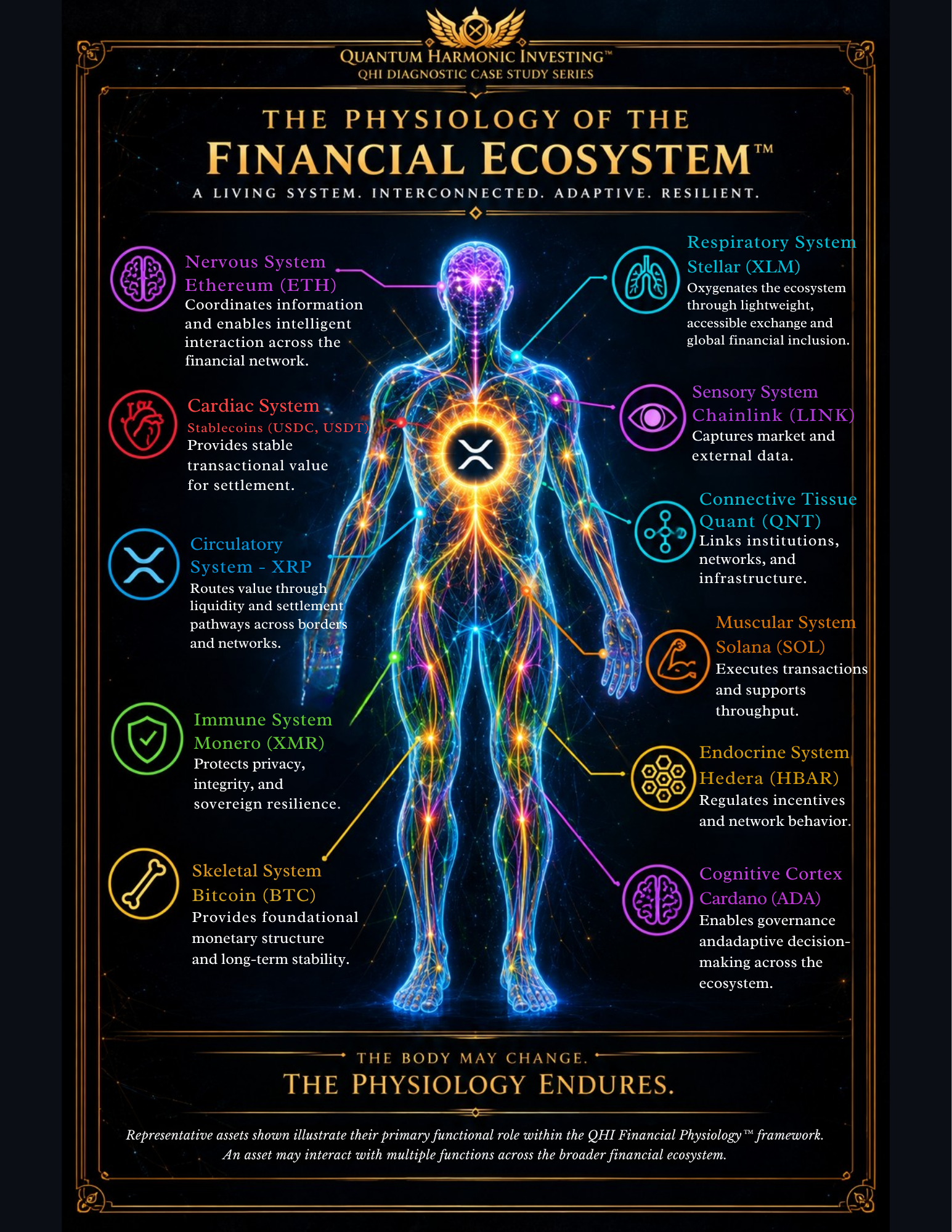
Financial Physiology™ translates complex financial systems into intuitive biological functions — revealing how structure, liquidity, resilience, and systemic behavior interact beneath price action.
Foundational Systems
Preserve monetary independence and long-term durability.
Infrastructure Systems
Coordinate movement, and communication across networks.
Computational / Platform Systems
Execute programmable financial activity and smart contract systems.
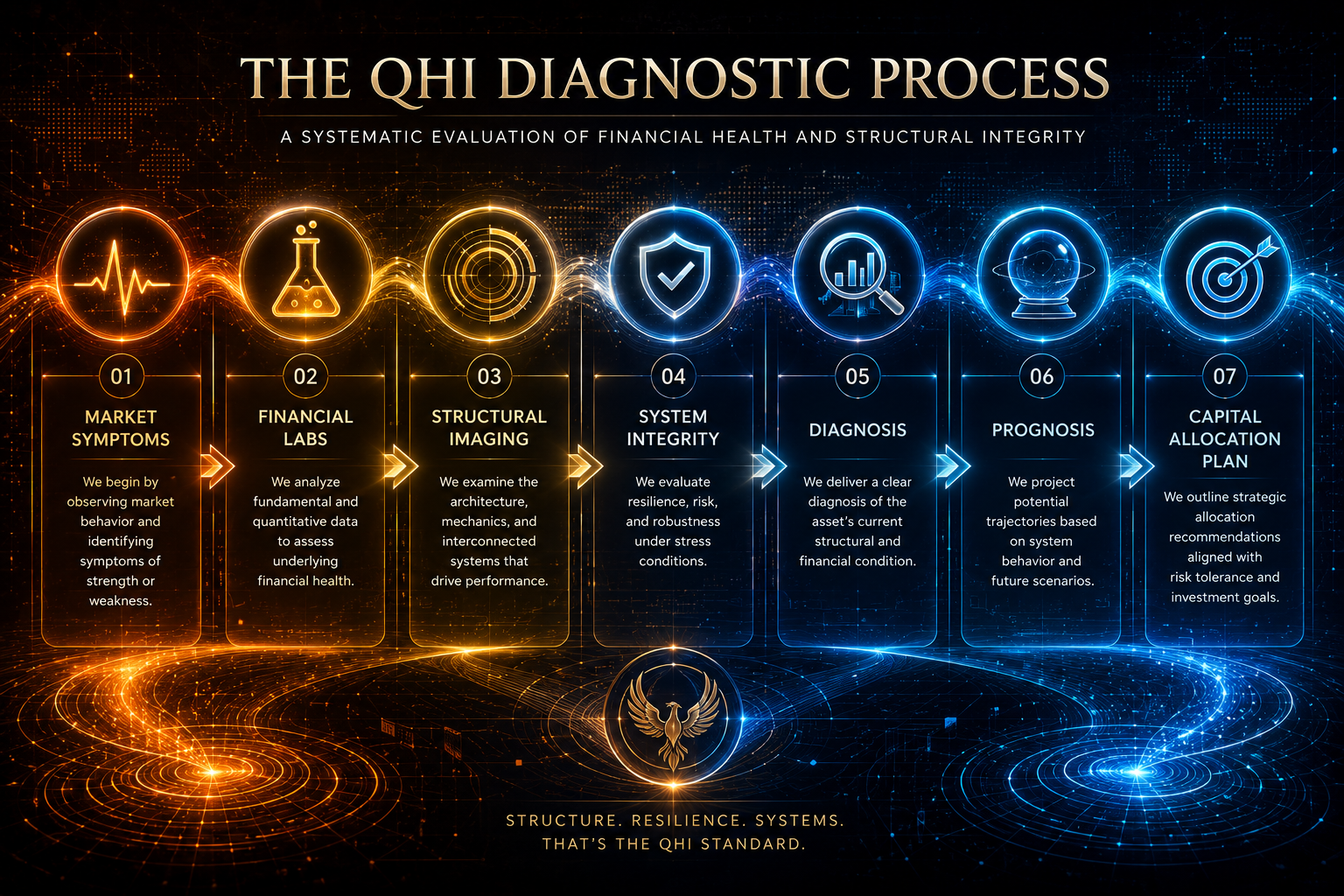
The QHI 33-Layer Financial Diagnostic Framework™ evaluates financial systems through a structured clinical process — analyzing market symptoms, financial health, structural integrity, resilience, and long-term systemic behavior.
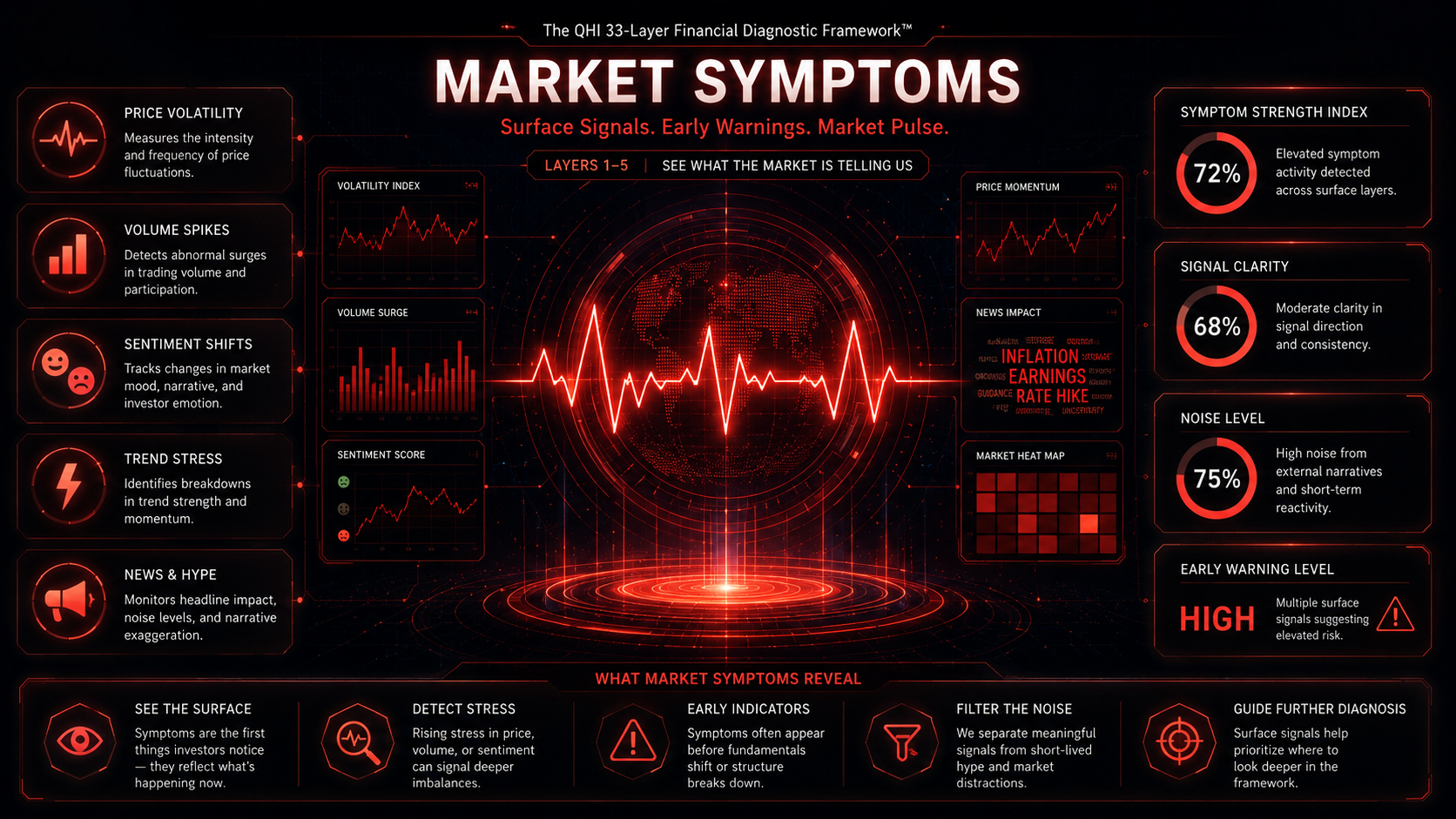
Evaluates price behavior, volatility, sentiment, and surface instability. Symptoms are signals of stress or stability — not the diagnosis itself.
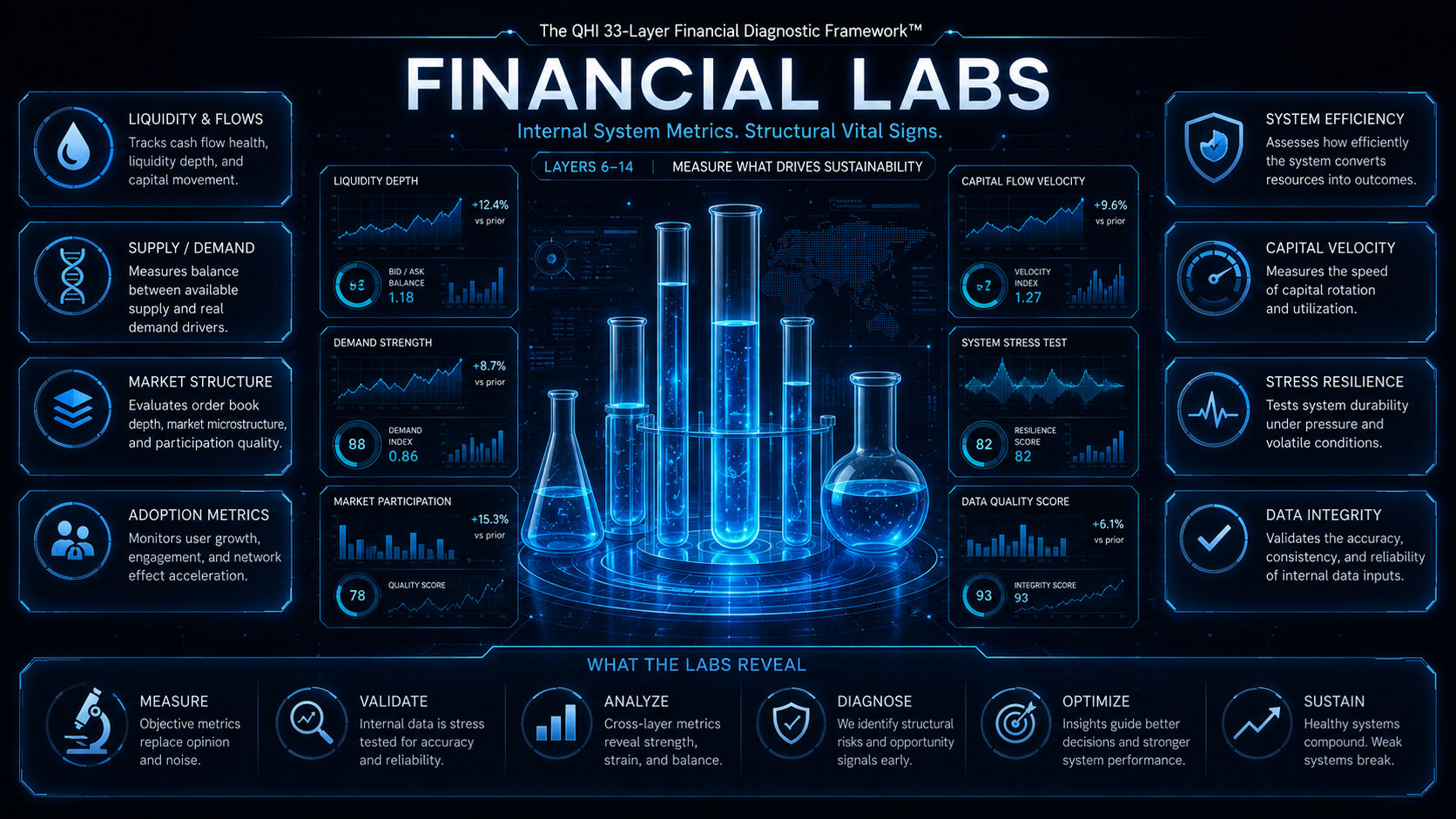
Measures liquidity, capital flows, supply dynamics, adoption, and internal system stress beneath price action.
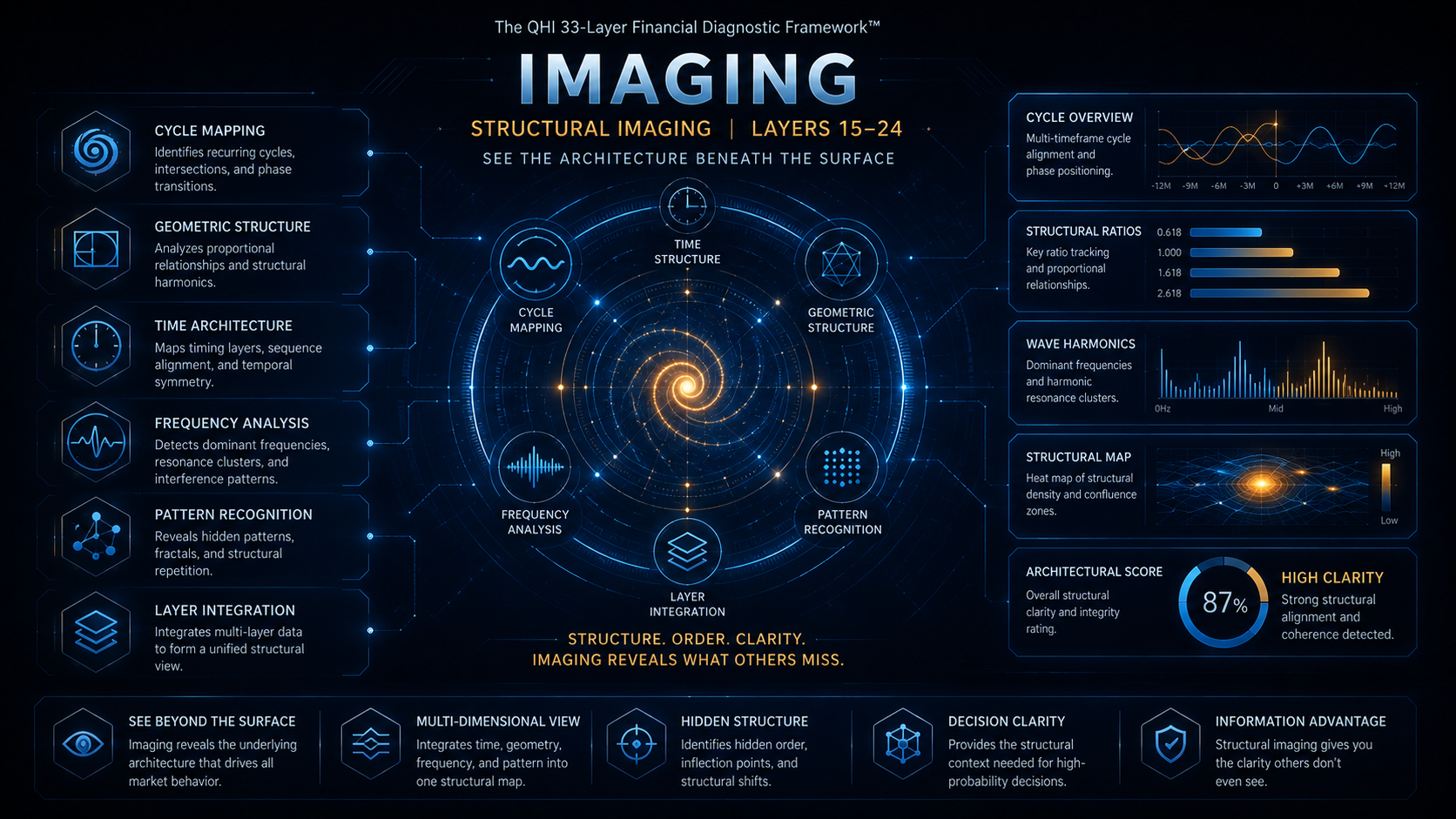
Reveals underlying structure through recurring cycles, geometry, macro timing, and volatility architecture.
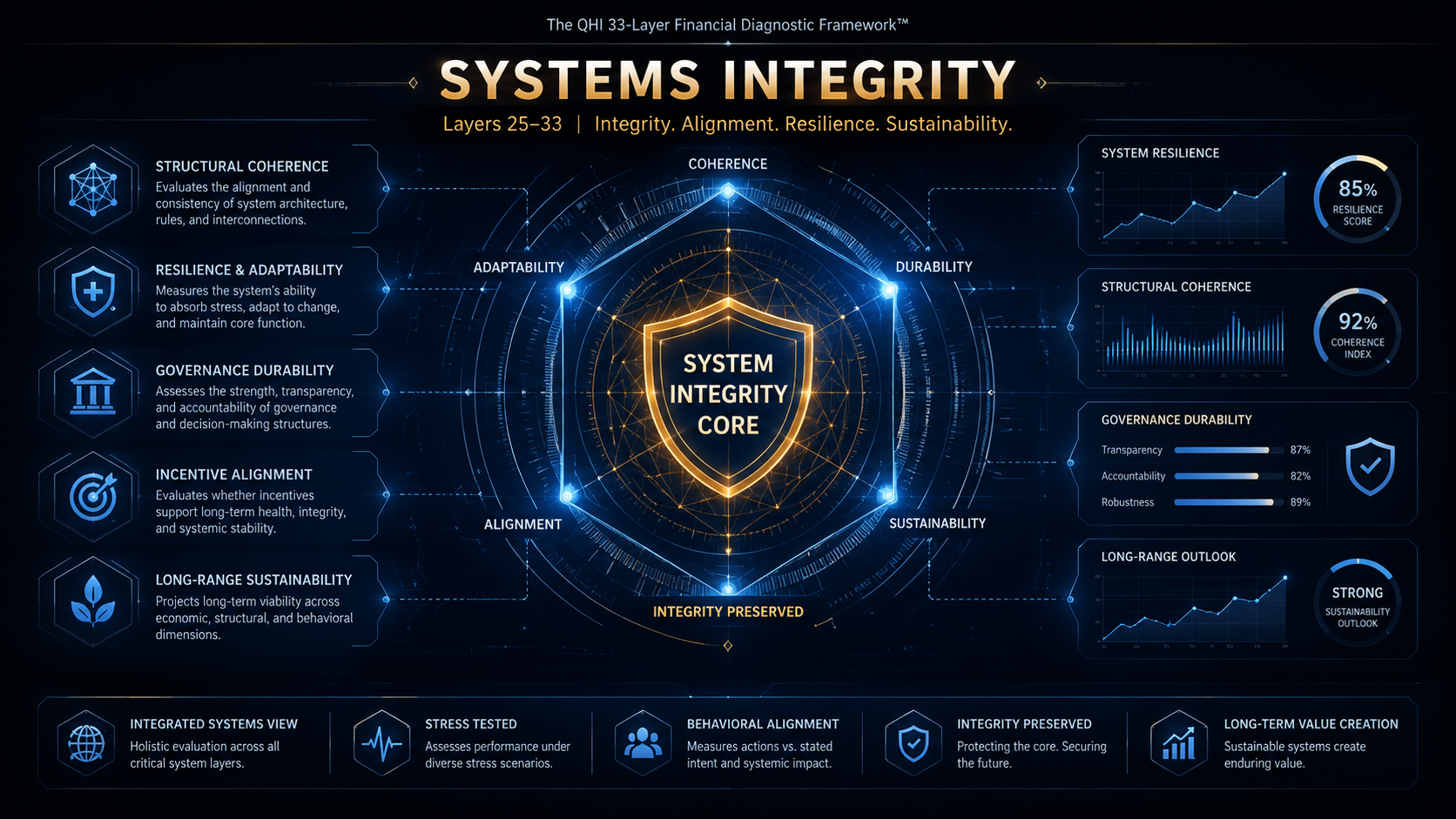
Evaluates systemic resilience, structural coherence, governance durability, and long-range sustainability across financial architectures.
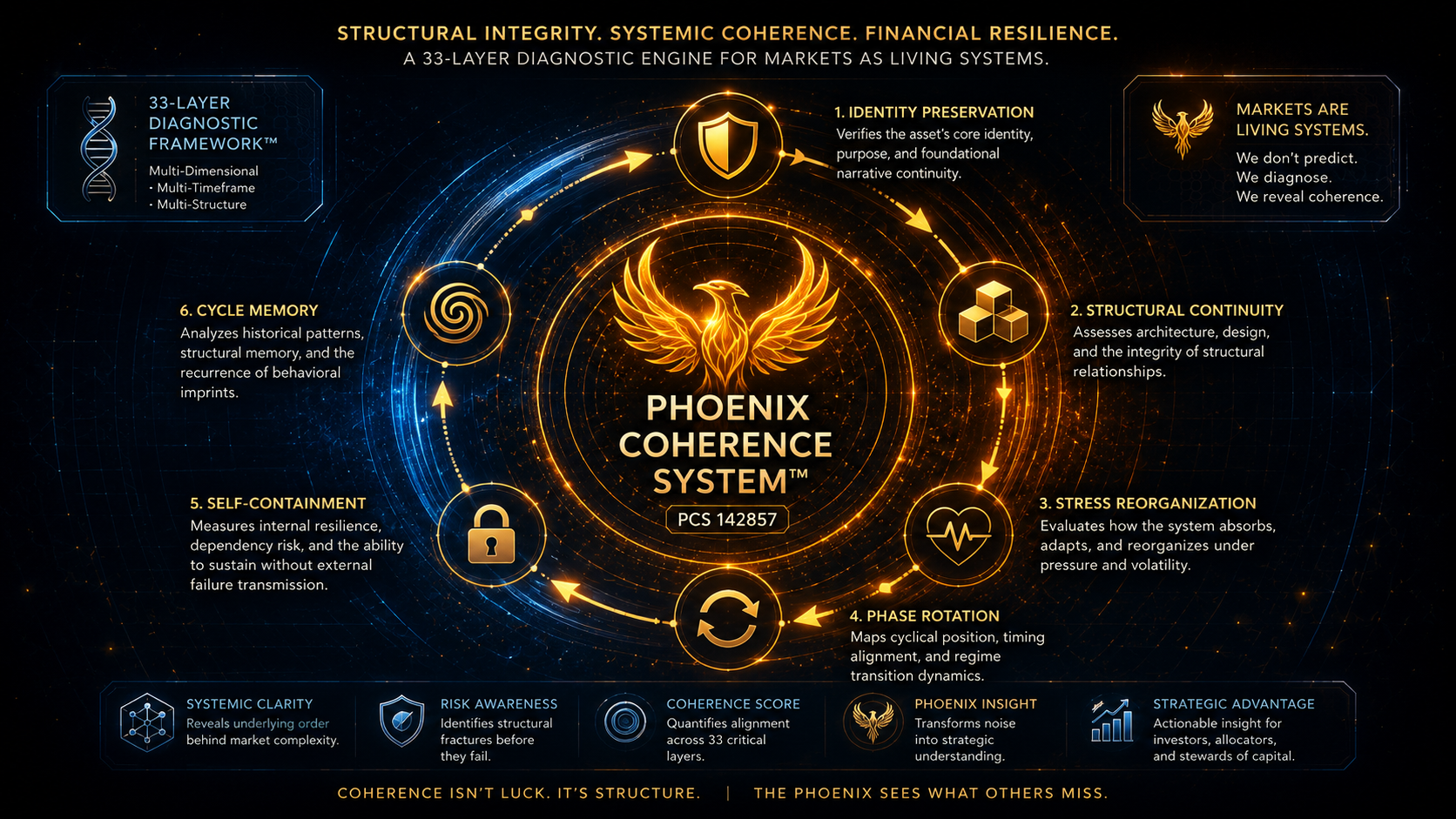
Phoenix Systems™
The Phoenix Coherence System™ (PCS 142857) Evaluates how systems behave under structural stress.

The Phoenix Qualification System™ (PCQ) Identifies systems capable of long-term sovereign survival.