


Why regulation & clarity matter in financial systems

Financial decisions depend on the ability to process information, assess risk, and respond proportionately to uncertainty. When cognitive clarity is compromised, even sound strategies can be misapplied or abandoned prematurely.
Within the QHI framework, clarity is treated as a functional prerequisite, not a personality trait. Clear thinking supports consistent execution, accurate evaluation, and the ability to distinguish meaningful signals from noise—especially in complex or rapidly changing markets.
Why Cognitive Clarity Matters
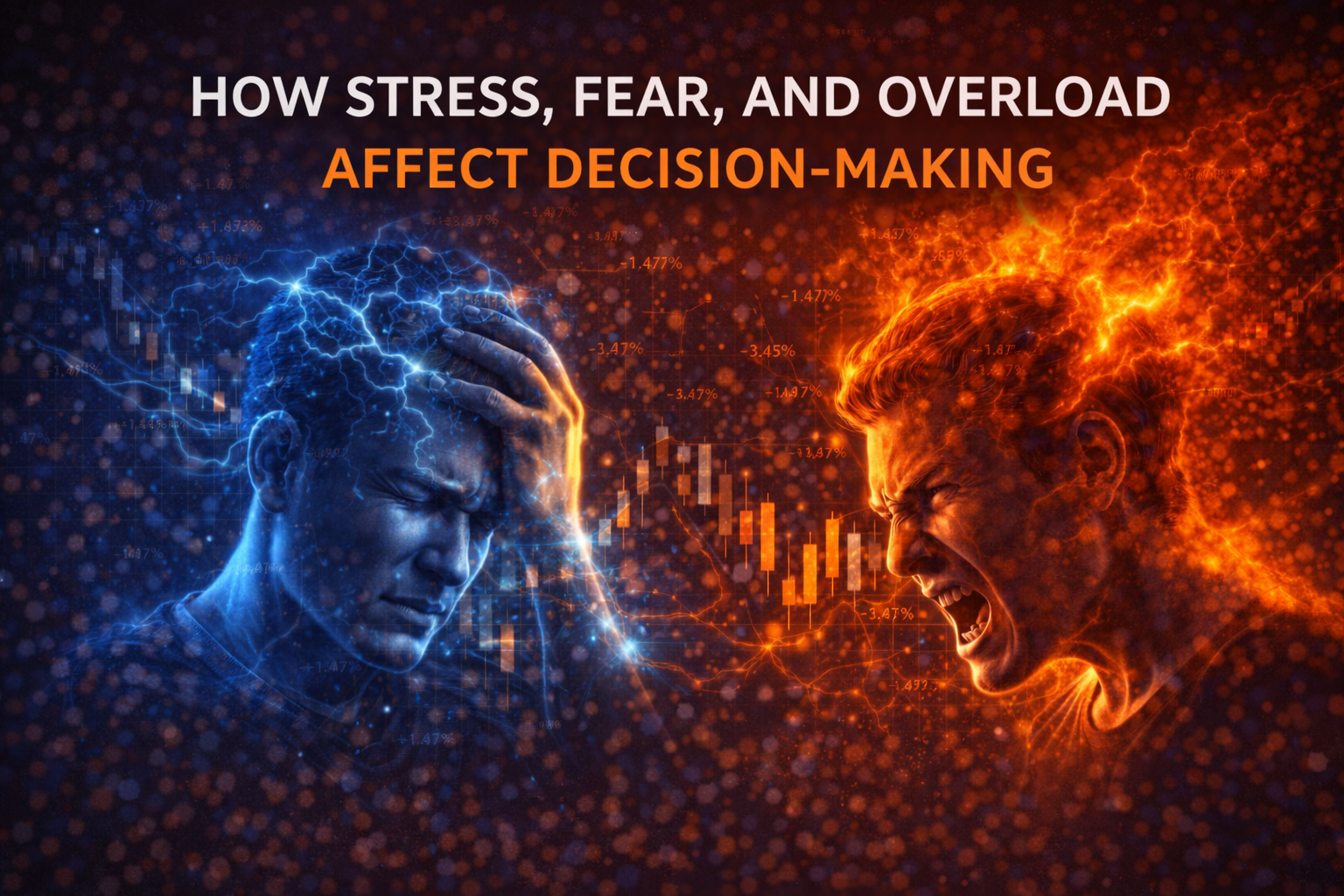
How Stress, Fear, and Overload Affect Decision-Making
Stress, fear, and cognitive overload alter perception, compress time horizons, and amplify reactive behavior. Under these conditions, investors are more likely to chase performance, exit prematurely, or avoid necessary decisions altogether.
QHI recognizes these responses not as failures of discipline, but as physiological and psychological stress responses. Understanding how these forces influence behavior allows investors to reduce emotional interference and create decision environments that support steadier, more deliberate action. risk exposure refers to holdings that were established under prior market conditions, assumptions, or guidance, but may no longer align with the current financial environment. These positions often persist due to familiarity, longevity, or emotional attachment rather than active evaluation.
Why regulation & clarity, matter in financial systems

Markets are complex systems, and so are the individuals navigating them. QHI integrates wellness principles because sustainable financial strategy requires regulation, recovery, and capacity, not just information.
By pairing financial diagnostics with an awareness of cognitive and nervous-system load, QHI helps investors approach capital allocation from a state of coherence rather than urgency. This integration supports long-term participation, clearer judgment, and alignment between strategy, timing, and personal resilience.ortfolio congestion occurs when multiple holdings create overlap, dilution, or hidden redundancy, reducing clarity and weakening overall effectiveness. While diversification is often encouraged, too much exposure to similar assets can quietly increase risk without improving performance.