

Digital Asset Security Protocols
Before evaluating digital assets, it is essential to understand how to protect them.
These foundational guides introduce the core cybersecurity principles used within the Quantum Harmonic Investing™ framework.
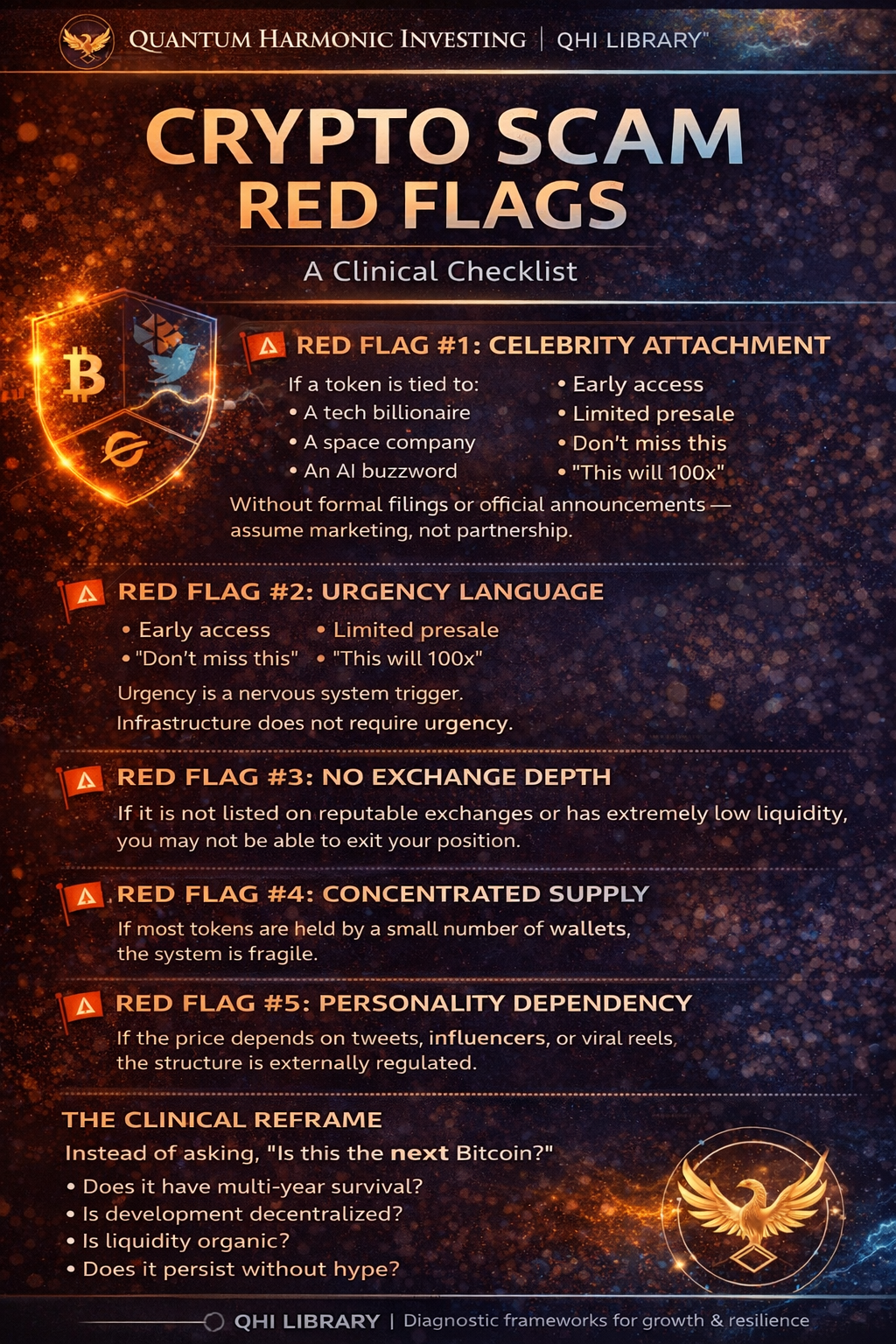
Crypto Scam Red Flags — A Clinical Checklist
Most crypto losses don’t come from volatility.
They come from narrative manipulation.
This one-page diagnostic checklist identifies the most common scam structures — celebrity attachment, urgency language, concentrated supply, shallow liquidity, and personality-dependent hype.
Instead of reacting to “the next Bitcoin” claim, this guide helps you evaluate infrastructure, survival, and structural integrity.
Because protecting your capital begins with regulating your financial nervous system.
Download this checklist and learn how to distinguish marketing from sovereignty.
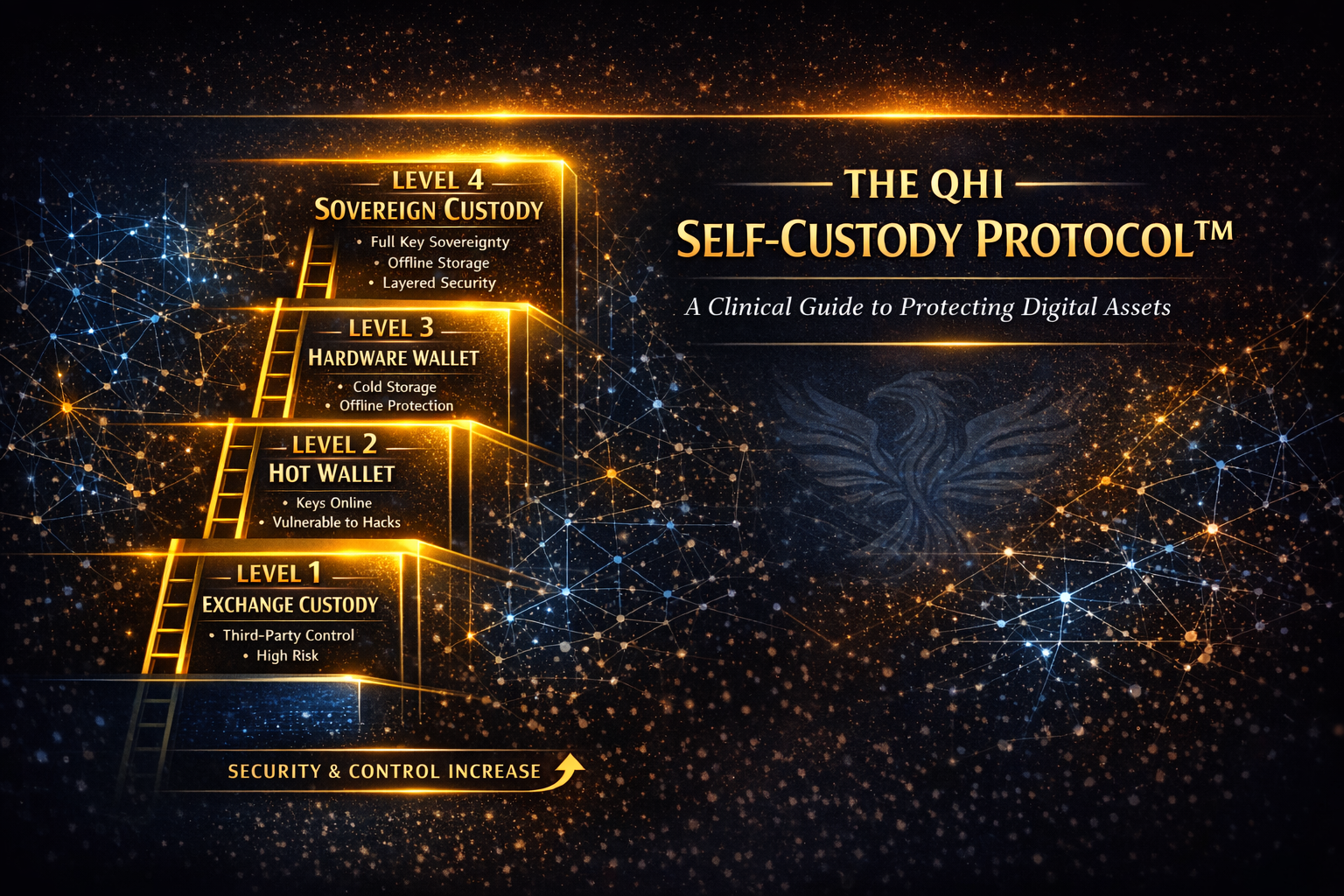
QHI Self-Custody Protocol™
Digital assets introduce a new responsibility: personal custody.
Unlike traditional financial accounts, cryptocurrency ownership is determined by control of private keys. Understanding how to secure those keys is essential before holding digital assets.
The QHI Self-Custody Protocol™ provides a clear, structured checklist designed to help individuals reduce common security risks associated with cryptocurrency storage and transactions.
This one-page guide outlines practical safeguards across six critical areas:
• Exchange safety practices
• Wallet security fundamentals
• Hardware wallet protocols
• Seed phrase protection
• Transaction hygiene
• Long-term sovereign storage
Rather than relying on hype or shortcuts, this protocol encourages disciplined security habits that protect digital assets over the long term.
This resource is offered as part of the Quantum Harmonic Investing™ Cyber Security Framework, supporting a calm and informed approach to digital asset stewardship.
Foundations for Sovereign Digital Custody
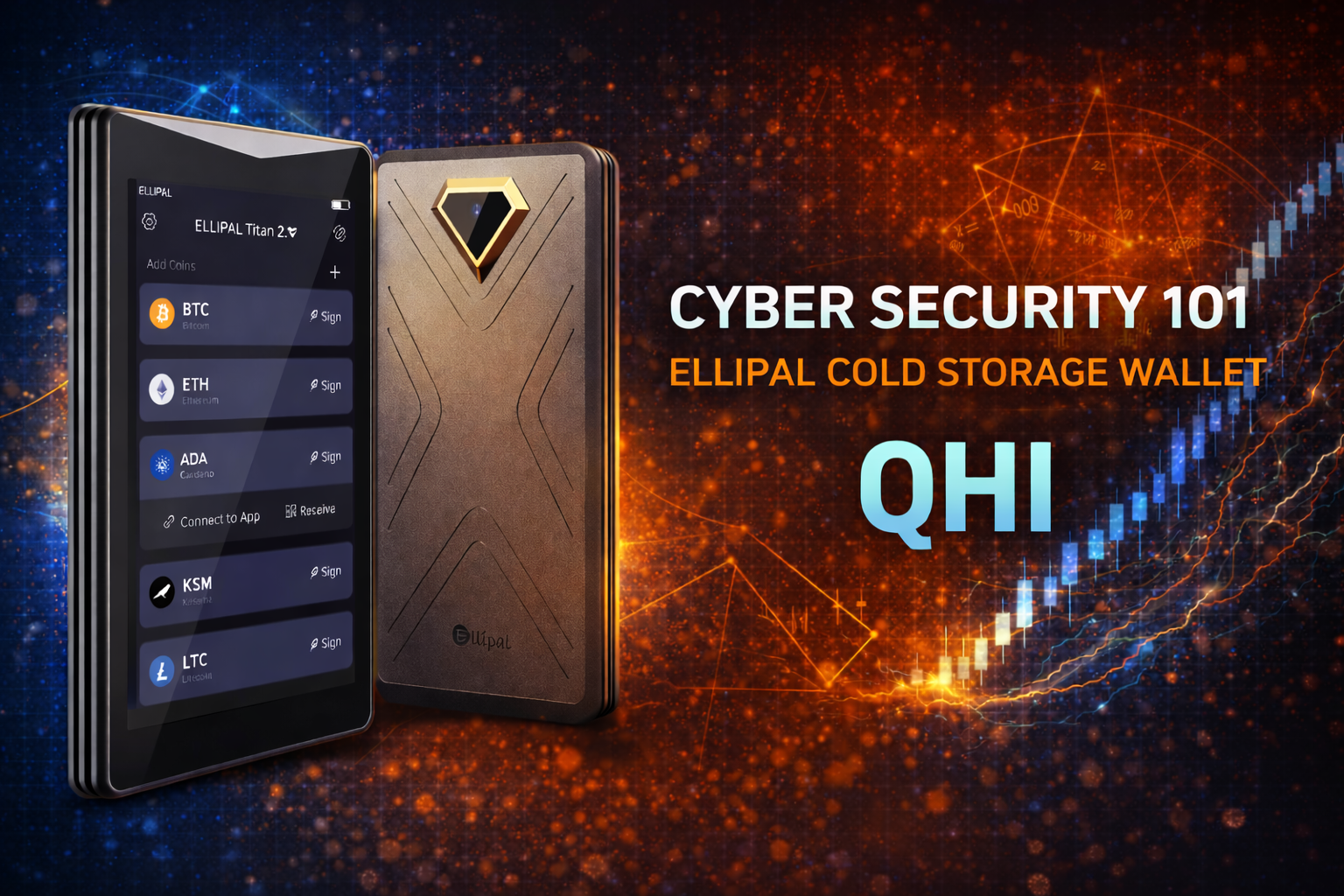
.The ELLIPAL Titan cold wallet is a fully air-gapped hardware wallet designed for true self-custody and long-term digital asset security.
Unlike software wallets or devices that rely on USB, Bluetooth, or Wi-Fi connections, ELLIPAL remains completely offline. Private keys are generated and stored within the device, and transactions are signed securely using QR codes—never exposing keys to the internet.
This architecture minimizes attack surfaces, reduces reliance on third parties, and places ownership and control where it belongs: with you.
At QHI, we use ELLIPAL as part of our Cyber Security 101 framework to demonstrate security-first custody, disciplined setup practices, and sovereign financial infrastructure.
ELLIPAL Cold Wallet
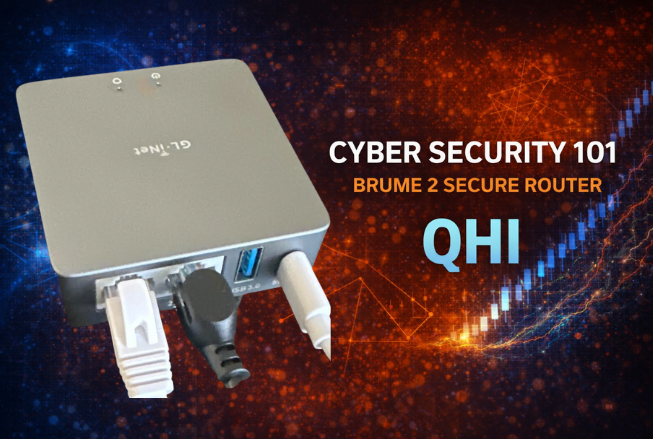
BRUME 2 Secure Router
The GL.iNet Brume 2 secure router is a compact, privacy-focused device designed to create a dedicated, hardened network environment for sensitive digital operations.
Unlike standard home routers, the Brume 2 allows for advanced firewall controls, network segmentation, and optional VPN integration—helping isolate critical activities such as firmware downloads, system updates, and verification steps from everyday internet traffic.
At QHI, the Brume 2 serves as a trust boundary within our Cyber Security 101 framework, ensuring that high-integrity tasks are performed on a clean, intentional network—separate from phones, apps, and general browsing—reducing hidden risk and strengthening overall system resilience.
Foundations for Sovereign Digital Custody
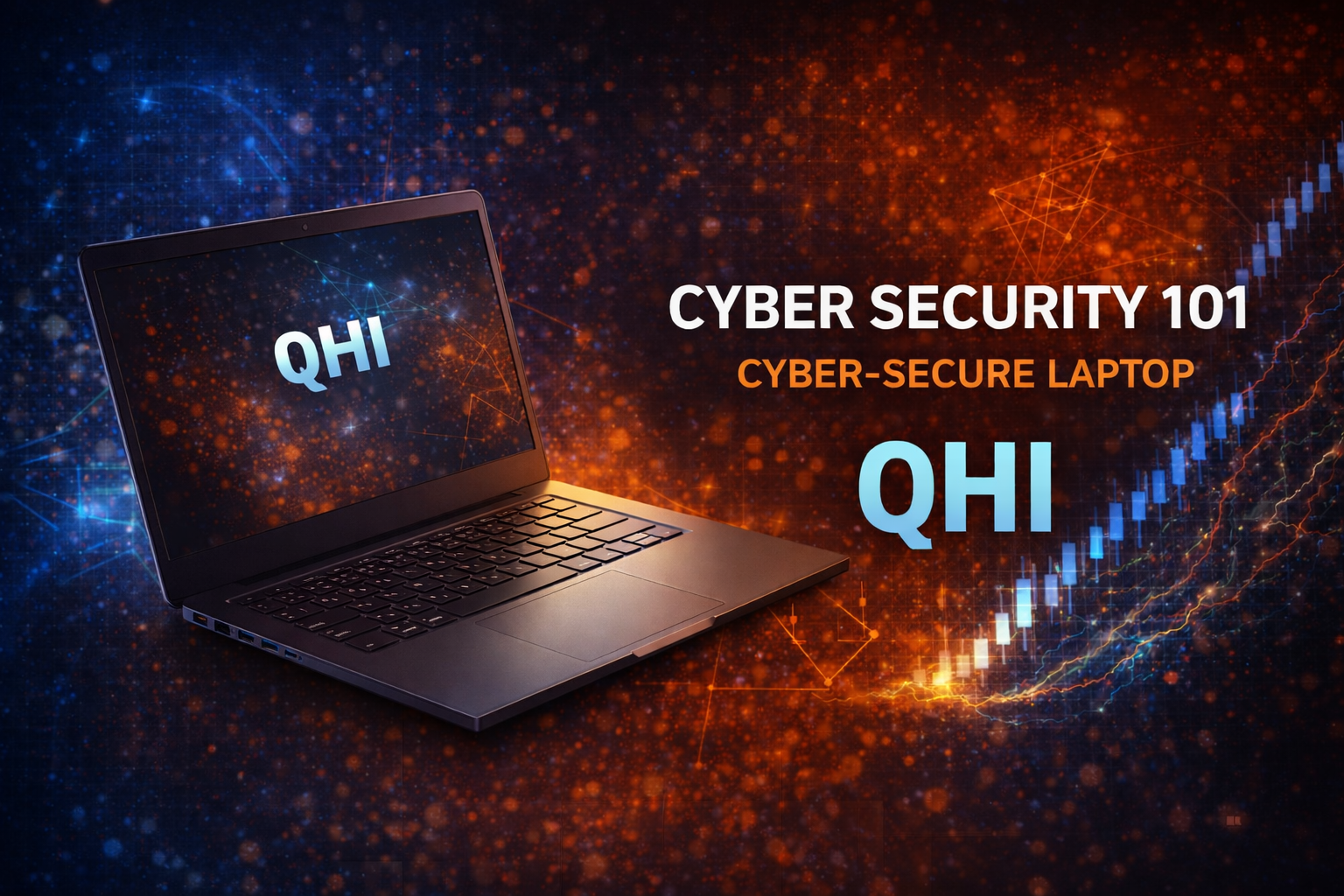
The cyber-secure laptop is a dedicated, purpose-built computer used exclusively for high-integrity digital operations within the QHI Cyber Security 101 framework.
Unlike everyday personal computers, this laptop is intentionally isolated from casual browsing, email, social media, and general applications. Running a clean Linux-based operating system and connected through a hardened network path, it serves as the environment for firmware downloads, system verification, documentation, and recovery procedures.
At QHI, the cyber-secure laptop functions as the control and verification layer—the place where trust is established, updates are validated, and critical actions are performed slowly and deliberately, reducing human error and minimizing hidden digital risk.
CYBER SECURE LAPTOP
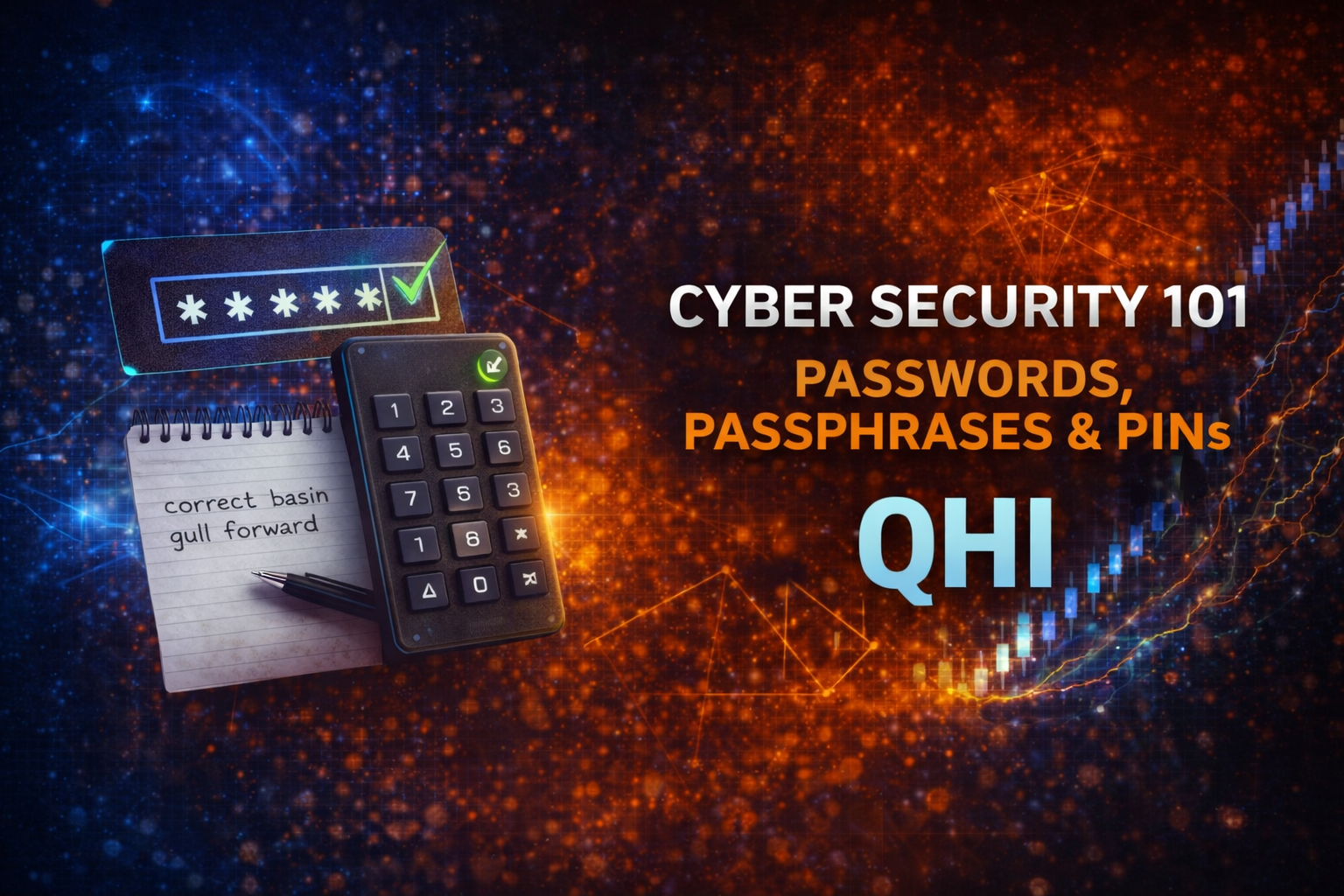
Passwords, Passphrases & PINS
Strong passwords, passphrases, and PINs form the first line of defense in any secure digital system. They protect access to devices, applications, and accounts long before advanced tools or hardware are involved.
Within the QHI Cyber Security 101 framework, we emphasize length, uniqueness, and intentional design over memorization or convenience. Passphrases—longer sequences of unrelated words—provide significantly stronger protection than short, complex passwords, while PINs serve as focused access controls for specific devices and actions.
When created thoughtfully and used consistently, these credentials reduce unauthorized access, limit the impact of breaches, and support a disciplined approach to digital security—where access is deliberate, controlled, and never accidental.
Foundations for Sovereign Digital Custody
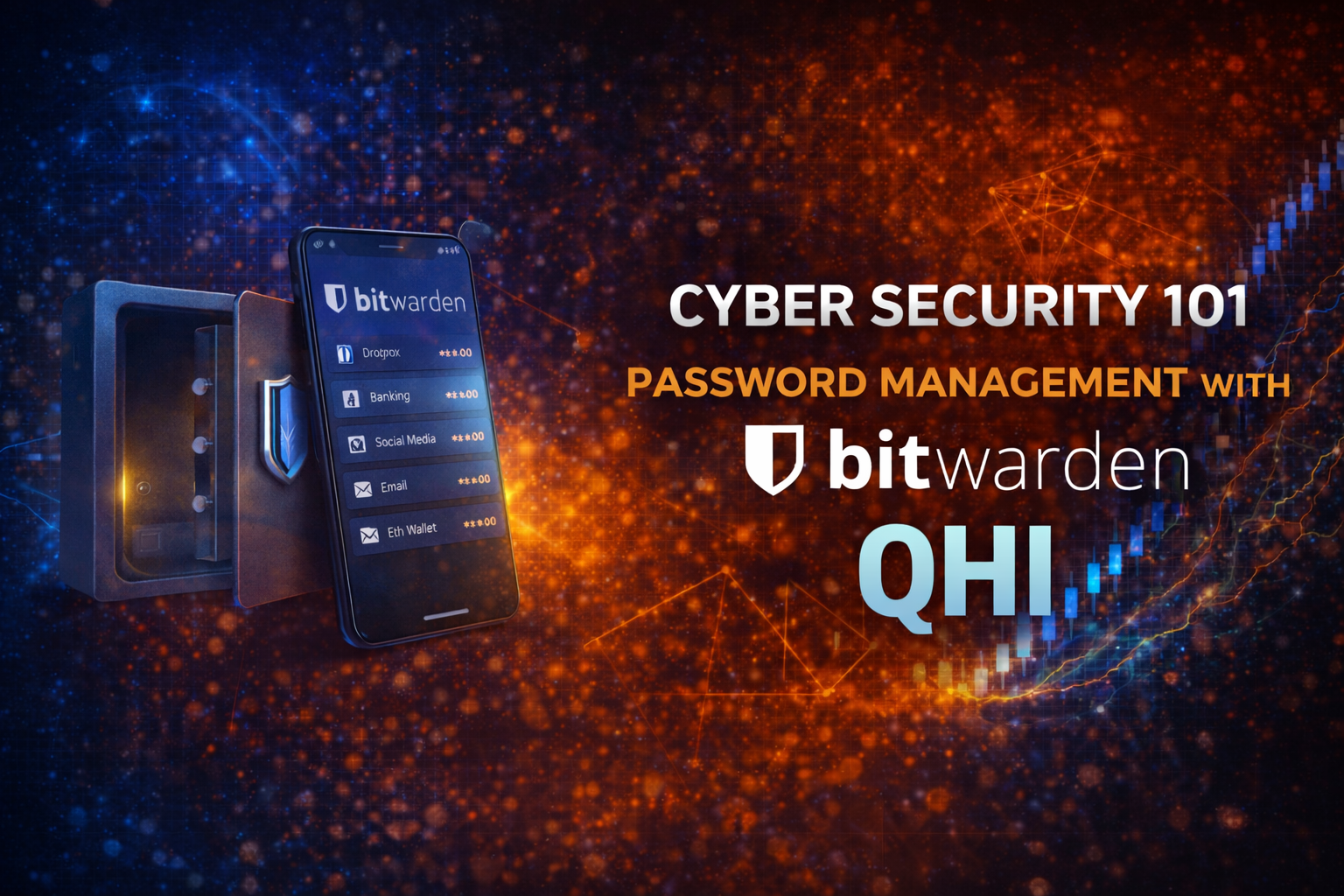
Bitwarden provides a secure, encrypted way to store and manage passwords and passphrases without relying on memory, browsers, or insecure notes.
Within the QHI Cyber Security 101 framework, Bitwarden is used as a reference vault, not an automation tool—allowing credentials to be stored safely while preserving intentional access and human oversight. This approach reduces password reuse, prevents weak credential habits, and lowers the risk of exposure from compromised devices or platforms.
When implemented correctly, password management supports sovereignty rather than dependency—helping maintain control, clarity, and resilience across an increasingly complex digital landscape.
Password Management with BITWARDEN

Digital Sovereignty & the Future of Finance
The financial system is undergoing a structural shift—from centralized custodianship toward individual responsibility, transparency, and self-custody. Digital sovereignty is the ability to own, control, and protect assets directly, without relying entirely on intermediaries, platforms, or third-party permissions.
Within the QHI framework, cyber security is not treated as a technical afterthought, but as a foundational skill for the emerging financial era. As money becomes increasingly digital, programmable, and global, the tools and habits used to secure access, verify integrity, and maintain control become inseparable from financial health itself.
Digital sovereignty is not about rejecting institutions—it is about understanding risk, reducing unnecessary dependency, and developing the capacity to participate confidently in modern finance with clarity, resilience, and informe.